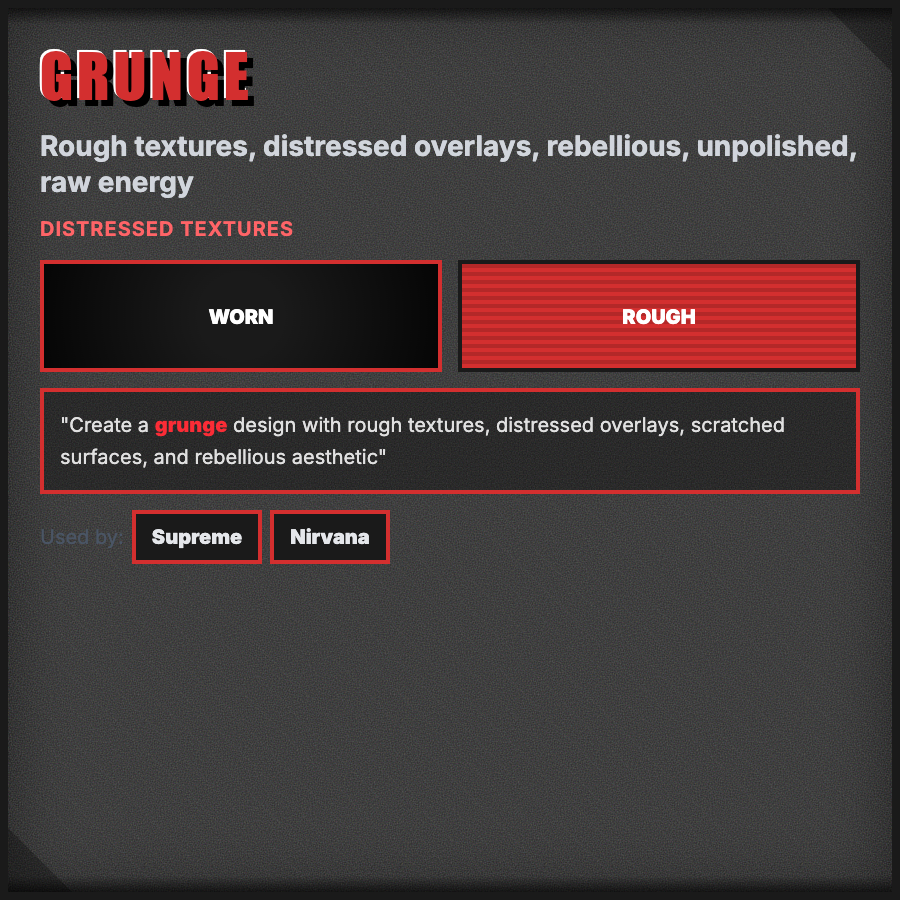
What is Grunge Design?
Grunge Design features distressed textures, rough edges, overlapping elements, muted colors, and raw aesthetics. Inspired by 90s alternative/punk culture, grunge intentionally looks unpolished and rebellious. Creates authentic, anti-establishment feel.
When Should You Use This?
Use grunge for music (rock, metal, punk), streetwear fashion, alternative brands, art projects, or products targeting counter-culture audiences. Works for brands that want to reject corporate polish and embrace raw authenticity.
Common Mistakes to Avoid
- •Too messy—grunge should be intentionally rough, not actually illegible or broken
- •Wrong audience—grunge alienates corporate/professional audiences; know your market
- •Overuse of texture—too many grunge textures create visual mud; use strategically
- •Missing structure—even grunge needs underlying composition and hierarchy
- •Dated execution—90s grunge can feel old rather than authentic; add modern elements
Real-World Examples
- •Music festivals—rock/punk festivals use grunge aesthetics for posters and branding
- •Streetwear brands—Supreme and similar occasionally use grunge-inspired graphics
- •Record labels—alternative music labels use grunge for authentic, raw aesthetic
- •Tattoo shops—many use grunge design for edgy, counter-culture positioning
Category
Aesthetic Design
Tags
grungedistressedroughpunk-aesthetic90s-alternative