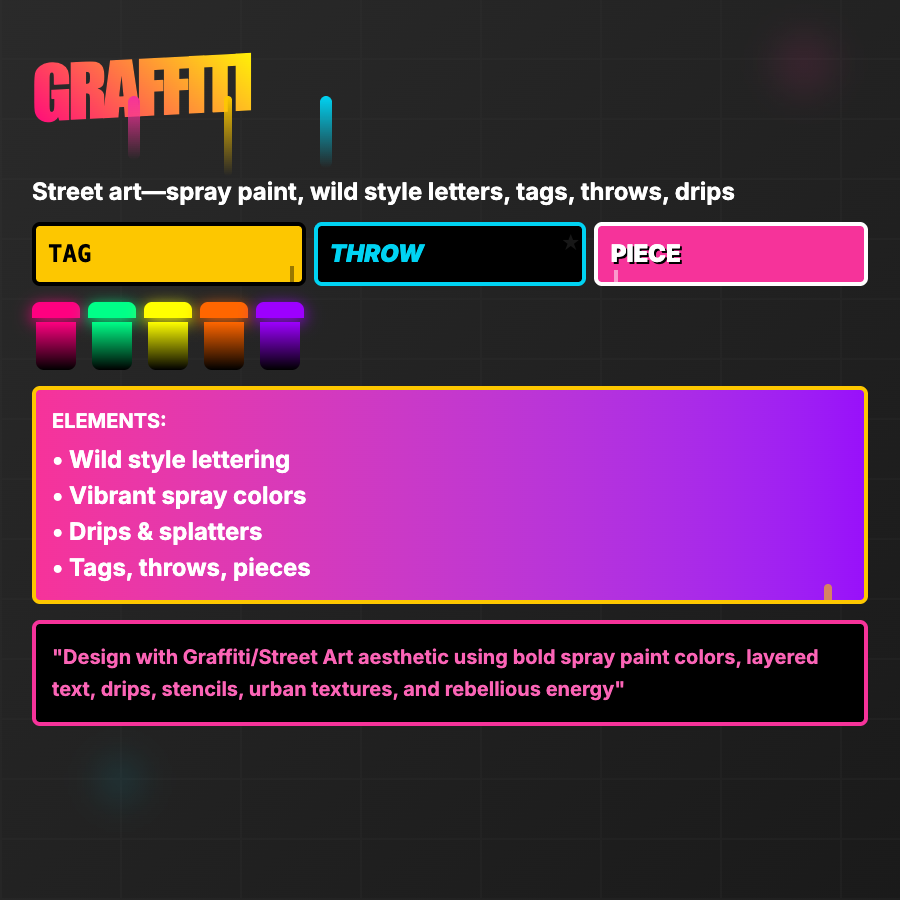
What is Graffiti Design?
Graffiti Design incorporates street art aesthetics—spray paint effects, bold tags, urban textures, vibrant colors, and counter-culture attitude. Brings outdoor urban art into digital interfaces with rebellious, expressive energy.
When Should You Use This?
Use graffiti for streetwear brands, hip-hop/urban music, youth brands, art platforms, or products targeting street culture audiences. Works when authenticity and urban credibility are important.
Common Mistakes to Avoid
- •Generic tagging—graffiti has distinct styles; generic "street" fonts look fake
- •Too clean—graffiti should have organic imperfection; perfect digital execution misses authenticity
- •Cultural appropriation—ensure genuine connection to street culture; avoid exploitation
- •Poor legibility—graffiti style can be hard to read; balance style with function
- •Wrong context—graffiti doesn't work for corporate/professional contexts
Real-World Examples
- •Supreme—streetwear brand incorporates graffiti and street art in campaigns
- •Urban music artists—many use graffiti aesthetics for album art and websites
- •Sneaker brands—Nike and Adidas use graffiti for urban/street campaigns
- •Street art apps—digital platforms showcasing graffiti use appropriate aesthetics
Category
Aesthetic Design
Tags
graffitistreet-arturbanspray-paintcounter-culture