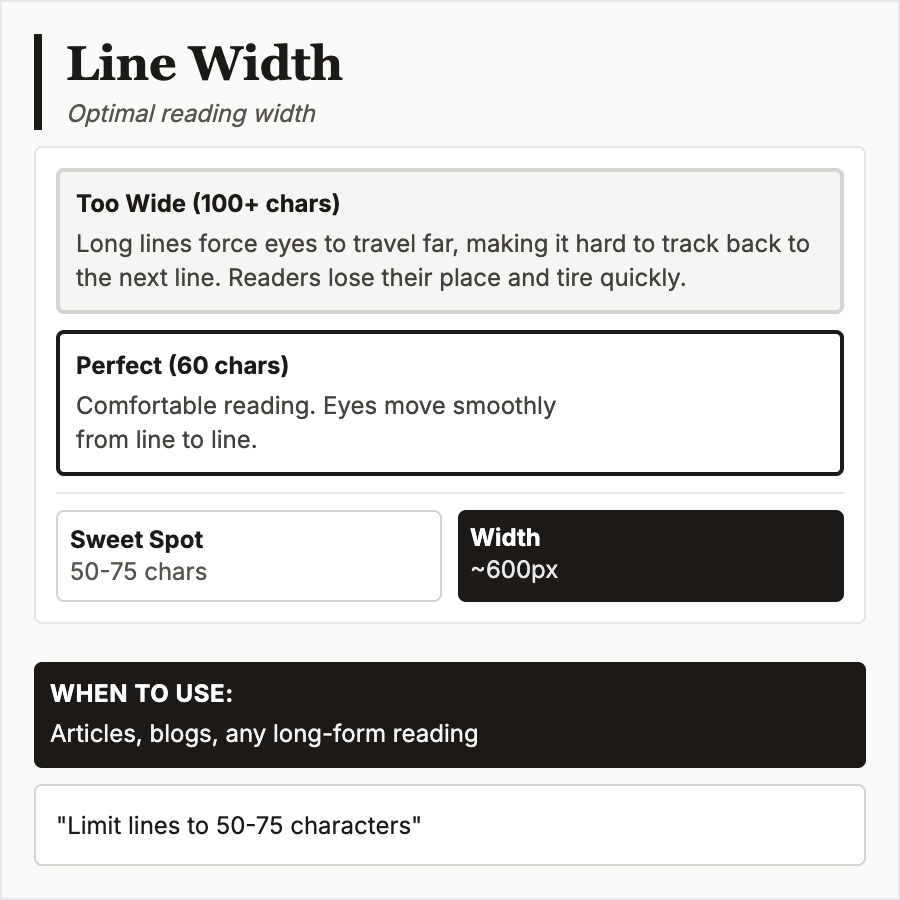
What is Line Width (Measure)?
Line Width (measure) is the number of characters per line of text. Optimal reading: 50-75 characters (average 66). Longer lines cause readers to lose their place; shorter lines disrupt reading rhythm. Control with max-width on text containers.
When Should You Use This?
Set max-width on all body text containers—essential for blog posts, articles, documentation, and long-form content. Don't let text span full width on large screens. Newspapers have used optimal measure for centuries; web should too.
Common Mistakes to Avoid
- •Full-width text—text spanning 1920px is unreadable; use max-width: 65ch or ~700px
- •Too narrow—mobile-first approach sometimes creates needlessly narrow desktop text
- •Ignoring font size—measure should adjust with font size; larger text needs more width
- •Fixed pixels—use ch units (character width) instead of pixels for responsive measure
- •Forgetting margins—adequate margins around text improve focus and readability
Real-World Examples
- •Medium—sets optimal line width around 680px for comfortable reading
- •Documentation—most docs sites use 60-70ch max-width for body text
- •Newspapers—print has used optimal measure for centuries; digital should follow
- •Books—traditional book design targets 60-70 characters per line
Category
Typography
Tags
line-widthmeasureline-lengthreadabilityoptimal-reading