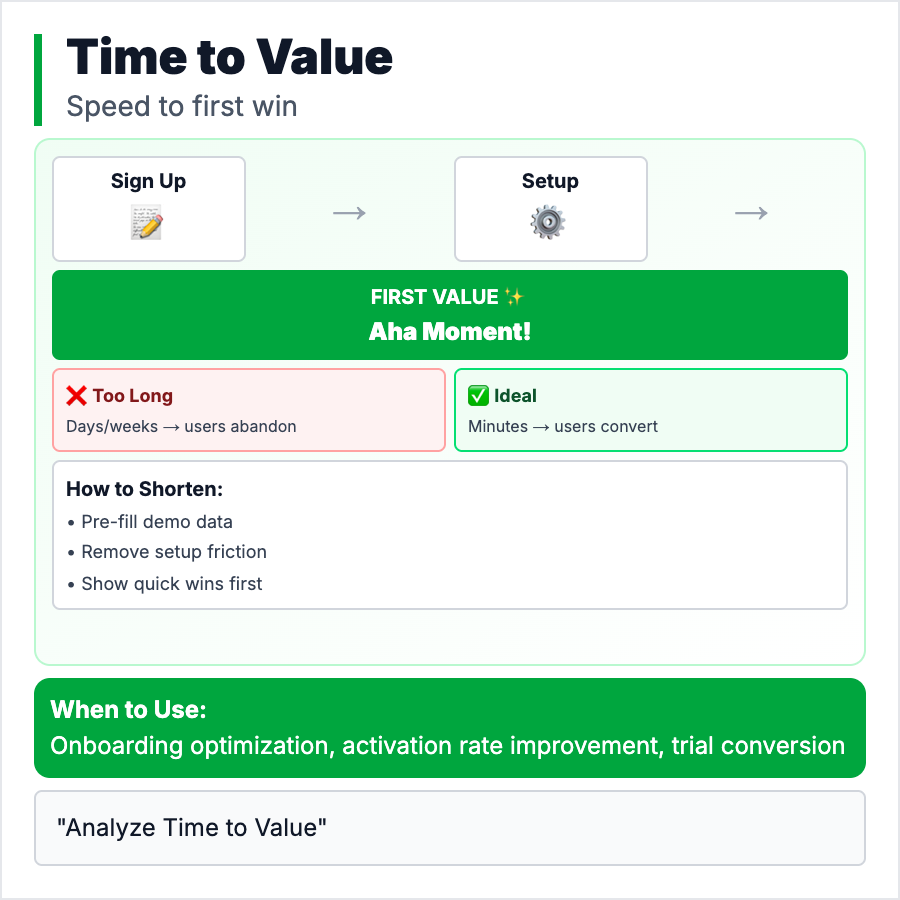
What is Time to Value?
Time to Value (TTV) is how long it takes a new user to get their first meaningful value from your product—their "aha moment." For Slack, it's sending the first message. For Figma, it's creating the first design. Shorter TTV = higher activation rates. If it takes 30 minutes to set up and users have to wait a day for results, most will abandon. Great products deliver value in minutes.
When Should You Use This?
Optimize Time to Value when you notice high signup-to-activation drop-off, when onboarding takes more than 10 minutes, or when users need setup/configuration before getting value. Track time from signup to first key action. Reduce TTV by removing unnecessary steps, pre-populating data, showing value upfront (empty states with examples), or offering templates.
Common Mistakes to Avoid
- •Too many onboarding steps—every field you ask for reduces activation
- •No empty state guidance—blank canvas is overwhelming, show examples
- •Value behind login—let users see/try product before forcing signup
- •No "aha moment" definition—define what first value looks like for your product
- •Asking for credit card before value—let users experience value first
Real-World Examples
- •Loom—Record first video in 30 seconds, instant value
- •Figma—Open file, see live cursors immediately, collaborative value instant
- •Stripe—7-line code snippet, test mode works instantly, value in minutes
- •Superhuman—Onboarding concierge gets you to inbox zero in first session
Category
Product Management